
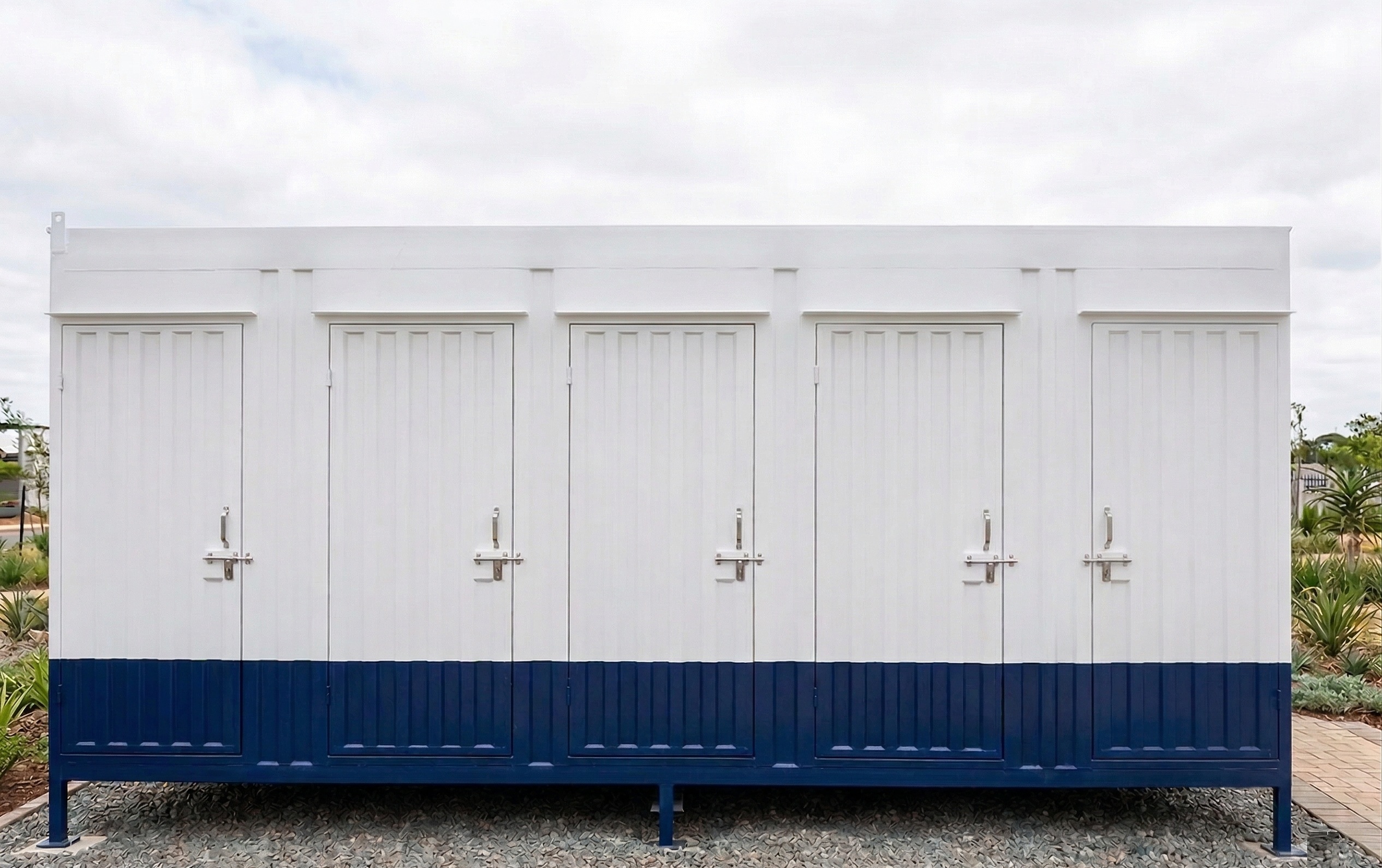
Portable toilet cabins need more than a basic enclosure. Hygiene, ventilation, plumbing, cleaning access and durability decide long-term usability.
Where toilet cabins are used
Portable toilet cabins are used at construction sites, labour camps, industrial areas, events, public facilities, schools, hospitals, infrastructure projects and remote work locations. They are especially useful where permanent sanitation is not available or cannot be built quickly.
The cabin must be planned for actual user volume. A lightly used guard post toilet and a public toilet block at a busy site need very different specifications.
What to check before buying
| User count | Estimate daily usage and peak usage before deciding number of units. |
|---|---|
| Water supply | Plan water tank, plumbing connection or external supply based on site availability. |
| Drainage | Decide septic connection, sewer connection or waste handling method. |
| Ventilation | Ventilation and exhaust are essential for odour control and user comfort. |
| Cleaning access | The design should allow easy cleaning, maintenance and inspection. |
Hygiene and ventilation
The most common failure in toilet cabins is poor ventilation and difficult cleaning. A good toilet cabin should have airflow, easy-to-clean surfaces, proper slope, leak protection and suitable fixtures.
For public or high-usage applications, the buyer should prioritise hygiene, durability and maintenance access over cosmetic finish alone.
Plumbing and drainage
Plumbing must be planned before the cabin is fabricated. Water inlet, outlet, drainage slope, waste connection, floor trap, washbasin and access for repair should be discussed clearly.
In remote sites, the cabin may need tank-based solutions. In industrial areas, it may connect to existing drainage. Each option affects cost and maintenance.
Material and maintenance
Outdoor toilet cabins face water exposure, cleaning chemicals, usage load and weather. Material selection should support corrosion resistance, easy cleaning and practical repair.
A toilet cabin should be inspected periodically for leakage, odour, broken fixtures, drain blockage and ventilation performance.
Placement checklist
Keep access easy
Users, cleaners and maintenance staff should reach the cabin safely.
Avoid waterlogging
Place the cabin on a stable base with proper drainage around it.
Plan privacy
Entry direction, lighting and surrounding movement should be considered.
Plan services
Water, waste, electricity and cleaning access should be available.
Practical takeaway
Portable cabin decisions should be based on use, site condition, expected life and serviceability. A well-specified cabin saves time and avoids rework after installation.
Frequently asked questions
Where are portable toilet cabins used?
They are used at construction sites, public areas, events, industrial locations, labour camps and remote project sites.
What is most important in a toilet cabin?
Hygiene, ventilation, plumbing quality, drainage, easy cleaning and durable material are most important.
Can toilet cabins be connected to existing drainage?
Yes, depending on site conditions. They can be planned for existing drainage, septic connection or tank-based usage.
How often should portable toilet cabins be maintained?
Maintenance depends on usage volume, but regular cleaning, inspection and drain checks are essential for hygienic operation.