
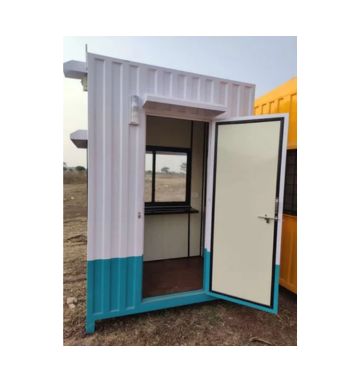
Security cabins are small structures, but their design affects visitor control, staff comfort, visibility and site safety.
Why security cabin design matters
A security guard cabin is not only a shelter. It is the first control point of a factory, construction site, residential project, warehouse, school, hospital or commercial premises. Its location and design affect visitor entry, security visibility and guard comfort.
A poorly designed cabin becomes hot, cramped, badly ventilated and difficult to use. This reduces alertness and makes the entry process inefficient.
Key requirements
| Visibility | Windows should support clear view of entry, exit, visitor movement and vehicle approach. |
|---|---|
| Ventilation | Proper airflow, fan provision and heat control improve working comfort. |
| Durability | Structure and outer finish should handle outdoor exposure. |
| Electrical | Lighting, fan, charging, CCTV monitor and communication equipment may be required. |
| Space | Cabin should allow sitting, basic storage and visitor register handling. |
Placement planning
The best cabin location is usually near the gate, but not directly blocking vehicle movement. It should allow the guard to monitor incoming visitors while staying protected from rain and harsh sun.
For industrial units, factories and construction sites, the cabin may also need space for visitor registers, safety instructions, access cards or intercom equipment.
Material and comfort
GI, MS and prefab panel-based cabins are commonly used depending on budget, exposure and expected life. For longer use, better insulation, proper roof treatment and corrosion-resistant finishing are worth considering.
Comfort is not a luxury in a security cabin. A guard may spend long hours inside, so ventilation, shade, lighting and internal space directly affect usability.
Electrical and safety
Plan electrical points before fabrication. Basic needs may include lights, fan, switchboard, charging socket and CCTV monitor provision. If the cabin is installed outdoors, proper wiring protection and grounding should be considered.
The door should open safely, windows should not create blind spots, and the cabin should be placed on a stable base.
Buying checklist
Check visibility
Can the guard see both pedestrian and vehicle movement?
Check comfort
Is there enough ventilation, shade and internal movement space?
Check durability
Is the structure suitable for outdoor exposure and long use?
Check utilities
Are lighting, fan, CCTV and communication points planned?
Practical takeaway
Portable cabin decisions should be based on use, site condition, expected life and serviceability. A well-specified cabin saves time and avoids rework after installation.
Frequently asked questions
What is a security guard cabin used for?
It is used as a shelter and control point for guards at factories, construction sites, residential projects and commercial properties.
What should a good guard cabin include?
It should include visibility, ventilation, seating space, weather protection, lighting and provision for basic communication or CCTV equipment.
Can security cabins be customised?
Yes. Size, windows, door position, insulation, electrical points and finish can be customised.
Where should a security cabin be placed?
It should be placed near the entry point with clear visibility, safe access and without obstructing traffic movement.