
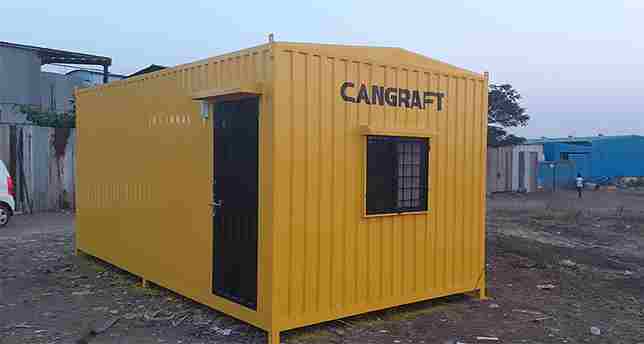
Quick take
The biggest mistake in site office and labour accommodation cabins is under-planning. Before ordering, define use, number of people, utility needs, sanitation, ventilation, layout flow, and expected project duration. A properly planned cabin setup improves both productivity and site management.
On a project site, temporary infrastructure has a direct impact on how well the entire operation runs. If the site office is cramped, badly located, or poorly ventilated, coordination suffers. If labour accommodation is uncomfortable, badly planned, or lacks basic sanitation, the problems show up in discipline, health, morale, and daily site stability. These cabins may be temporary, but the consequences of poor planning are very real.
That is why site office cabins and labour accommodation cabins should be treated as operational infrastructure, not side purchases. The objective is not just to place a structure on site. The objective is to create a working environment that supports supervision, communication, worker rest, hygiene, and orderly site functioning.
Poorly planned cabins create daily friction. Properly planned cabins quietly improve discipline, comfort, coordination, and control across the entire site.
What should be planned in a site office cabin?
A site office cabin is the control point of a project. It may be used for engineer coordination, document review, client visits, site meetings, progress tracking, billing work, vendor management, or supervisor reporting. Because of that, the layout should be decided based on actual use, not guesswork.
Number of users
Plan the space based on who will use the office daily, not just on the number of chairs you can fit inside.
Work type inside
Meetings, paperwork, system use, and reporting all need different space and furniture planning.
Client and visitor movement
If clients or consultants will visit, the office should look organised and allow basic professional interaction.
Storage and documentation
Site records, drawings, registers, PPE, and files often need planned storage space from day one.
In many cases, a site office fails not because it is too small, but because it is functionally confused. A better approach is to define whether the cabin is for core administration only, for mixed operations, or for site-plus-client coordination.
What should be planned in labour accommodation cabins?
Labour accommodation is even more sensitive because it affects human comfort directly. When accommodation is poorly planned, the site starts facing hidden costs: absenteeism, hygiene issues, conflict, lower morale, and avoidable health problems.
Occupancy planning
Do not overload the cabin. The number of workers should be matched realistically to floor space and sleeping arrangement.
Ventilation
This is critical in Indian site conditions. Poor airflow quickly makes accommodation uncomfortable and unhealthy.
Privacy and basic order
Even simple accommodation should allow some structure in sleeping, storage, and movement.
Weather suitability
Heat, rain, and dust exposure should influence material choice, insulation, and window planning.
Labour accommodation does not need luxury. But it does need dignity, usability, and basic health-conscious planning. A good cabin solution should be practical for workers to live in, not just easy for management to order.
Utilities, washrooms, and sanitation must be planned together
One of the biggest mistakes is treating the sleeping or office cabin separately from utilities. In reality, the success of the setup depends heavily on electricity, lighting, ventilation, drinking water access, toilet planning, and drainage.
- Electrical planning: Lighting points, charging points, fans, and office equipment loads should be known in advance.
- Washroom access: Labour accommodation especially must be planned with adequate toilet and bathing support.
- Water availability: Drinking, washing, and sanitation all depend on reliable water planning.
- Drainage: Poor drainage around cabins creates hygiene and maintenance problems quickly.
- Night usability: External lighting and safe movement paths are often ignored but matter greatly on active sites.
Key point
A cabin without proper utilities is only a shell. Real usability comes from integrating the structure with sanitation, power, airflow, and safe access.
Layout and movement planning across the site
The cabin itself may be fine, but the overall arrangement on site may still be poor. Location matters. Office cabins should be accessible but not obstructive. Labour cabins should be practical, safe, and reasonably separated from heavy activity zones where needed.
Site office placement
- Accessible for engineers and visitors
- Clear line of supervision where possible
- Protected from unnecessary dust and noise
- Close to work coordination areas
Labour accommodation placement
- Safe distance from hazardous operations
- Proper access to toilets and water points
- Good airflow and drainage conditions
- Orderly circulation and resting environment
Durability, cleaning, and maintenance should be built into planning
Construction and industrial sites are hard on temporary structures. Dust, repeated usage, rough movement, weather exposure, and utility load all test the cabin over time. That is why material and maintenance thinking should start before ordering.
Surfaces should be easy to clean, fittings should withstand daily use, and the cabin should not create frequent repair requirements. A cabin that looks acceptable on delivery but performs poorly after two months is not a good site solution.
Common mistakes to avoid
Most site cabin problems come from predictable errors made during planning, not fabrication.
These mistakes create daily stress later. The better approach is to think like an operator, not just a buyer. Ask how people will actually work, rest, move, and use the facilities each day.
Why proper planning improves project performance
Better cabin planning improves more than comfort. It improves discipline, communication, worker stability, site presentation, and daily management control. On a busy project, that matters a lot.
- Site meetings become easier and more organised.
- Supervision staff work in a more functional environment.
- Workers get better rest and sanitation support.
- Movement and utility usage become more orderly.
- Overall site management becomes more stable and professional.
Frequently asked questions
What is the first thing to plan in site office and labour accommodation cabins?
The first step is to define actual use, occupancy, project duration, and utility needs. Without this, the specification usually becomes weak.
Why is ventilation so important in labour accommodation cabins?
Because worker comfort, hygiene, and sleep quality are heavily affected by airflow, especially in hot and humid site conditions.
Should utilities be planned separately after cabin installation?
No. Utilities like power, water, washrooms, and drainage should be planned together with the cabins from the start.
Why does cabin placement on site matter?
Because accessibility, safety, noise, drainage, supervision convenience, and daily movement all depend on where the cabins are positioned.
Is low price the right basis for choosing these cabins?
No. For site offices and labour accommodation, usability, durability, sanitation, and layout planning matter much more than just the lowest quote.
Final thought
Site office and labour accommodation cabins should be planned as working infrastructure, not temporary afterthoughts. When layout, utilities, comfort, sanitation, and site movement are planned properly, the entire project runs with less friction and better control.