
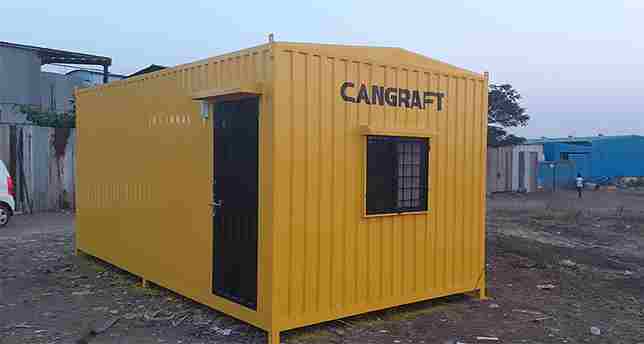
A practical buyer-focused guide for selecting portable cabins for construction sites, industrial plants, offices, security, sanitation and project use.
When portable cabins make sense
Portable cabins are suitable when a project needs usable space quickly without waiting for conventional civil construction. They are commonly used as site offices, security cabins, toilet cabins, accommodation blocks, stores, reception units, clinics and temporary commercial spaces.
The main advantage is flexibility. A cabin can be installed faster, relocated when the project moves, customised for actual use and maintained with less disruption than a permanent structure. For industrial and construction buyers, this is often more useful than a generic low-cost shed.
The buying checklist
1. Define the use clearly
Office, toilet, security cabin, clinic, accommodation and storage cabins need different layouts, ventilation and fittings.
2. Check site conditions
Ground level, approach road, crane access, drainage, sun exposure and wind exposure affect cabin planning.
3. Decide expected life
A three-month temporary requirement and a five-year site office should not be specified in the same way.
4. Plan utilities early
Electrical load, lighting, AC, exhaust, water, drainage and internet points should be planned before fabrication.
Material and structure
The buyer should not look only at outside appearance. The real value is in the frame, wall panel, roof, floor, finishing quality and joint protection. For site conditions in India, corrosion protection, water sealing and practical maintenance access matter.
Common options include MS frame cabins, GI cabins, insulated PUF panel cabins and customised prefab structures. The right choice depends on climate exposure, intended use, mobility requirement and budget.
Size and layout
| Small cabins | Useful for security guards, ticket counters, small site desks and temporary booths. |
|---|---|
| Medium cabins | Useful for site offices, supervisor cabins, pantry rooms, stores and clinic rooms. |
| Large cabins | Useful for office blocks, classrooms, accommodation, control rooms and project admin units. |
| Custom cabins | Best when furniture, partitions, washrooms, electrical load or user movement need specific planning. |
Electrical and utility planning
A cabin should be designed around practical usage. If users need AC, computers, lighting, fans, CCTV, charging points, water connection or plumbing, these should be part of the specification. Retrofitting later usually increases cost and reduces finish quality.
For toilet and clinic cabins, ventilation, water supply, drainage and easy cleaning become more important than visual design alone.
Supplier evaluation
A good supplier should discuss application, site condition, material choice, expected life, transport, installation, after-sales support and realistic delivery timelines. Avoid buying only on lowest price if the cabin will be used daily by staff, customers or project teams.
Ask for previous work photos, material details, finishing options, transport responsibility and clarity on what is included in the quoted price.
Common mistakes
Practical takeaway
Portable cabin decisions should be based on use, site condition, expected life and serviceability. A well-specified cabin saves time and avoids rework after installation.
Frequently asked questions
What should I check before buying a portable cabin?
Check the intended use, structure, wall material, insulation, floor, roof, electrical fittings, ventilation, size, delivery access and supplier experience.
Is the cheapest portable cabin always a bad option?
Not always, but a very low price often means weaker material, fewer fittings, poor finishing or reduced service life.
Can portable cabins be customised?
Yes. Size, layout, partitions, doors, windows, electrical fittings, toilet units and external finish can be customised.
Are portable cabins suitable for long-term use?
Yes, if material selection and fabrication quality are appropriate for the site conditions and expected usage.