
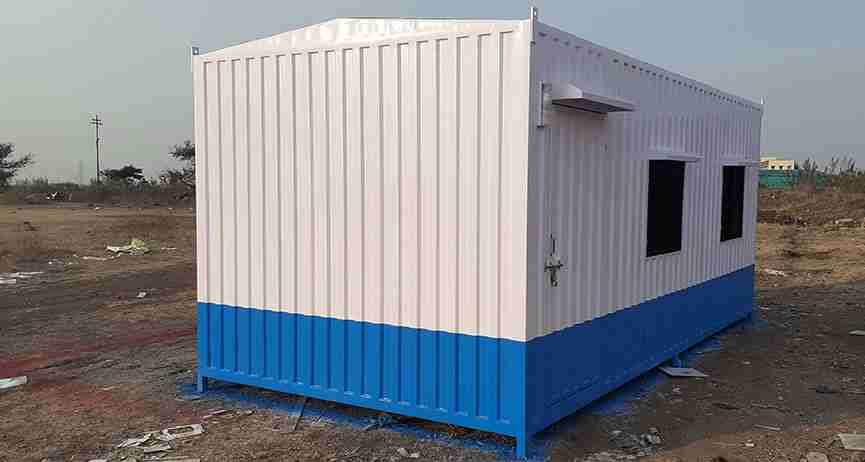
A practical guide to what affects portable cabin pricing and how buyers should compare quotations beyond the basic per-square-foot number.
Why cabin costs vary
Portable cabin cost is not determined by size alone. Two cabins of the same dimension can have very different prices if the structure, wall panel, floor, insulation, electrical work, plumbing and finishing are different.
For industrial buyers, the correct question is not simply “what is the cheapest cabin?” The better question is “what specification is suitable for this use and how long should it last?”
Main cost factors
| Size | Larger cabins need more material, stronger handling, transport planning and site space. |
|---|---|
| Structure | MS, GI, container-type and prefab structures differ in strength, finish and expected life. |
| Wall and roof | Insulated panels, GI sheets, PUF panels and finishing material directly affect comfort and cost. |
| Interior fittings | Partitions, doors, windows, lights, fans, AC points, furniture and plumbing add to total cost. |
| Transport | Distance, vehicle type, road access, unloading and crane requirement affect landed cost. |
Material choices
A basic cabin may be adequate for short-duration storage or temporary use. But office cabins, clinics, accommodation units and public-use toilet cabins need better finishing, ventilation and utility planning.
For areas exposed to sun, rain and dust, insulation and corrosion resistance should be considered seriously. Saving on material at the start can increase maintenance and discomfort later.
Fittings and utilities
Electrical points, lighting, fans, AC provision, exhaust fans, plumbing, water tanks, sanitary fittings and drainage connections should be specified clearly. Many quotation mismatches happen because one supplier includes these and another does not.
The cost of a toilet cabin, clinic cabin or accommodation cabin can be very different from a plain empty office cabin because the service fittings are more complex.
Transport and installation
Buyers should consider the landed cost at site, not only ex-factory price. Transport route, loading/unloading, foundation or support base, crane requirement and installation supervision can influence the actual project cost.
For remote project sites, access planning is especially important because even a good cabin can become difficult to place if site logistics are ignored.
How to compare quotations
Compare specifications
Check structure, wall, roof, floor, paint, insulation and fittings line by line.
Compare inclusions
Clarify electrical, transport, GST, unloading, installation and after-sales responsibility.
Compare expected life
A cabin meant for daily use should not be compared with a short-duration temporary unit.
Compare service support
Manufacturer experience and responsiveness matter after delivery.
Practical takeaway
Portable cabin decisions should be based on use, site condition, expected life and serviceability. A well-specified cabin saves time and avoids rework after installation.
Frequently asked questions
What is the main factor affecting portable cabin cost?
Size is important, but structure, wall material, insulation, fittings, transport and installation often create the bigger cost difference.
Should I compare cabin prices only per square foot?
No. Per-square-foot comparison is useful only when the specifications are identical.
Do electrical and plumbing fittings affect cost?
Yes. Office, toilet, clinic and accommodation cabins require different fittings, and these affect the final price.
Can portable cabin cost be reduced?
Yes, by matching the specification to actual use and avoiding unnecessary features, but core structural quality should not be compromised.