
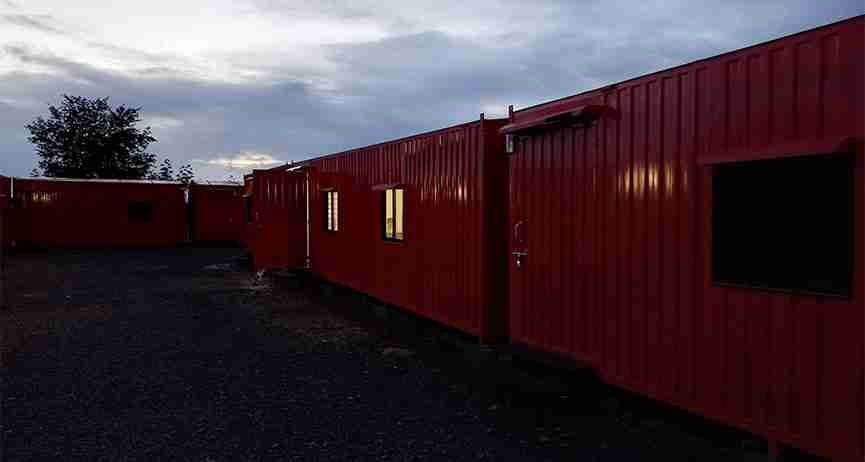
Choosing the right cabin size is not only about length and width. It is about how people will use the space every day.
Why size planning matters
A portable cabin that is too small becomes uncomfortable and inefficient. A cabin that is too large increases material, transport and installation cost unnecessarily. The right size comes from user count, furniture, equipment, movement space and utility requirement.
For site offices and industrial units, poor size planning usually shows up after installation when tables, files, people, AC units and wiring compete for space.
Common cabin sizes
| Small units | Commonly used for security cabins, ticket counters, information booths and single-person workspaces. |
|---|---|
| Medium units | Used for site offices, supervisor cabins, stores, pantry spaces, clinic rooms and small meeting cabins. |
| Large units | Used for office blocks, labour accommodation, classrooms, control rooms and multi-person site facilities. |
| Custom units | Used when the cabin needs partitions, washrooms, furniture planning, medical use or special equipment space. |
Layout planning
A cabin should be planned from inside out. Before finalising the outer size, decide how many users will sit inside, where the door should be, window direction, table placement, storage, electrical points and ventilation.
For toilet cabins and clinic cabins, internal layout becomes even more important because plumbing, privacy, exhaust, handwash and cleaning access need to be built into the plan.
Use-wise size selection
Security cabin
Needs visibility, compact seating, ventilation and space for basic controls or visitor entry records.
Office cabin
Needs table space, seating, storage, electrical points, lighting and sometimes AC provision.
Toilet cabin
Needs user movement, plumbing, waste connection, cleaning space and ventilation.
Accommodation cabin
Needs sleeping space, storage, ventilation, safety, sanitation access and durability.
Transport constraints
Cabin size should also respect transport and site access limitations. Road width, turning radius, gate opening, overhead wires, crane access and unloading area should be checked before fabrication.
A very large cabin may look efficient on paper but become difficult to transport or place. In such cases, modular joining of smaller units may be more practical.
Practical takeaway
Portable cabin decisions should be based on use, site condition, expected life and serviceability. A well-specified cabin saves time and avoids rework after installation.
Frequently asked questions
What is the best size for a portable office cabin?
It depends on the number of users, furniture, storage and meeting requirement. The layout should be planned before finalising size.
Can portable cabins be made in custom sizes?
Yes. Custom dimensions are often better when the cabin has a specific site or application requirement.
Does a larger cabin always mean better value?
No. Oversized cabins increase cost and may create transport difficulties. Correct sizing is more important than maximum size.
Should transport access be checked before finalising cabin size?
Yes. Road access, gate width, unloading space and crane access can limit practical cabin size.