
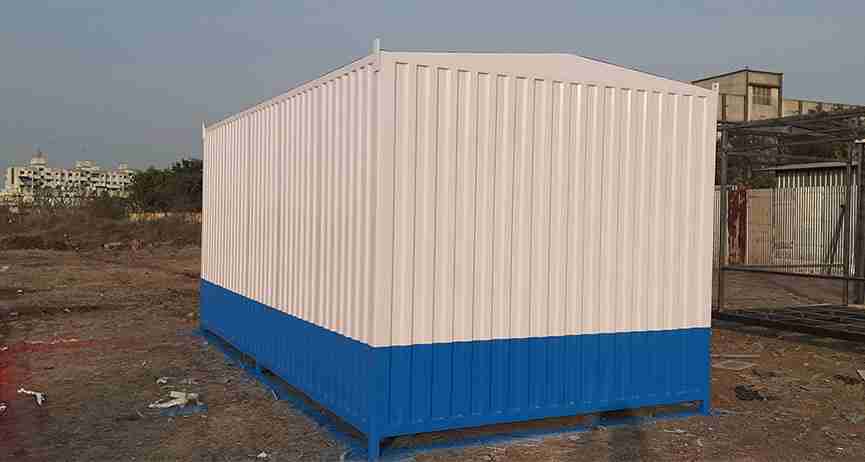
A practical comparison for buyers deciding between a portable office cabin and conventional RCC construction for site, industrial or temporary office use.
The core difference
RCC construction is a permanent civil structure. A portable office cabin is a prefabricated, movable space solution that can be installed faster and relocated when needed. The right choice depends on time, land use, project duration, budget and future flexibility.
For long-term permanent buildings, RCC may be appropriate. For site offices, temporary admin spaces, project cabins, expansion offices and relocatable workspaces, portable cabins often make more commercial sense.
Speed comparison
| Portable office cabin | Can usually be fabricated and deployed much faster because most work happens off-site. |
|---|---|
| RCC construction | Requires civil work, curing time, labour coordination, approvals, finishing and longer site disruption. |
| Business impact | Portable cabins reduce waiting time when the requirement is urgent or project-based. |
Cost and flexibility
Portable cabins usually reduce site disruption, civil dependency and future relocation loss. RCC may provide permanent asset value, but it is harder to move, modify or repurpose once built.
For construction, industrial and infrastructure projects, the cost of delay often matters as much as construction cost. A cabin that allows operations to start faster can be more valuable than a cheaper structure that takes months.
Where RCC is better
Permanent buildings
RCC is better when the structure is intended to be permanent for decades.
Heavy multi-storey use
Where load, height and permanent occupancy requirements are complex, RCC may be more suitable.
Integrated campus design
RCC works better when the building is part of a long-term architectural master plan.
Regulatory requirement
Some uses may specifically require permanent civil construction.
Where portable cabins are better
Fast site office
Project teams can start working quickly without waiting for civil work.
Temporary projects
Cabins can be moved when the project location changes.
Expansion needs
Useful when factories or sites need quick additional office space.
Lower disruption
Less wet work, less mess and faster deployment compared to RCC.
Decision checklist
Choose portable cabins when speed, relocation, flexibility and lower site disruption matter. Choose RCC when permanence, architectural integration and long-term fixed infrastructure are the priority.
For many Indian project sites, the best approach is hybrid: use portable cabins for project offices and temporary functions while keeping RCC for long-term core infrastructure.
Practical takeaway
Portable cabin decisions should be based on use, site condition, expected life and serviceability. A well-specified cabin saves time and avoids rework after installation.
Frequently asked questions
Is a portable office cabin cheaper than RCC construction?
It depends on specification, duration and site conditions, but portable cabins often reduce time, disruption and relocation loss for temporary or project-based use.
Which is faster: portable cabin or RCC construction?
Portable cabins are usually much faster because they are prefabricated and require less on-site civil work.
Can a portable office cabin be relocated?
Yes. Relocation is one of the main advantages of portable office cabins when designed and handled correctly.
When should I choose RCC instead of a portable cabin?
Choose RCC for permanent, long-term buildings where relocation and quick deployment are not priorities.